




About this group
Sharks and rays together make up the elasmobranchs, one branch of the cartilaginous fishes. A little over 500 species of shark and a little over 600 species of ray are known, so rays actually slightly outnumber sharks.
Their shapes and homes vary widely, but their skeletons, gills and breeding set them apart from most other fish.
Bodies
The easiest difference to spot is the gills. Most fish have a bony gill cover with one opening on each side. Sharks and rays have none: five to seven pairs of gill slits open straight to the outside.
They also lack the gas-filled swim bladder most fish use to float. Instead, a large, oil-rich liver helps keep them up.
Their skin is covered in tiny tooth-like scales that make it feel rough, like sandpaper. The teeth in the mouth are close relatives of these scales. When a tooth falls out, the next one in the row behind moves forward to replace it, and this goes on throughout life.
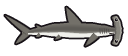
Their senses are sharp. Besides a keen sense of smell and a lateral line that feels movement in the water, they have the ampullae of Lorenzini, which pick up the faint electric fields given off by prey. The wide head of the scalloped hammerhead is thought to help by spreading these sensors over a broad area.
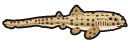
Breeding is different too. Males have claspers on their pelvic fins, and eggs are fertilised inside the female. Some, like the bullhead shark, lay eggs in tough cases, while others, like the giant manta ray, give birth to young that grew inside the mother. Either way, the young come out looking much like small adults, and there are not many of them at a time.
Ways of life
How they breathe says a lot about how they live. Many open-ocean sharks let water flow in through the mouth and over the gills as they swim, so they keep moving to keep breathing.
Sharks and rays that live on the bottom can pump water over their gills with the mouth and throat, so they can breathe while lying still. Rays draw water in through spiracles, openings just behind the eyes, which lets them breathe even when buried in sand.
Diets vary too. Some chase fish and squid, the bullhead shark crushes shellfish and sea urchins, and giants like the whale shark and the giant manta ray strain plankton from seawater.
Telling them apart
Flat does not always mean ray. The real test is the gill slits: on the sides in sharks, on the underside in rays. In rays the big pectoral fins are joined to the sides of the head, so there is no clear line between head and fin.
Angel sharks, for example, are as flat as rays, but their pectoral fins are separate from the head and they are true sharks. Guitarfishes, on the other hand, look rather like sharks, but their gill slits are underneath, which makes them rays.
People and these fish
Despite their fearsome image, sharks are confirmed to bite people unprovoked only a few dozen times a year worldwide. Serious injuries involve a small number of large species, and most sharks pose no danger to people.
The bigger story is what people do to sharks and rays. A study published in 2021 assessed about 1,200 species, including their cousins the chimaeras, and found that more than a third are threatened with extinction. The main causes are targeted fishing and bycatch, being caught in nets meant for other fish. Because they grow slowly and have few young, their numbers take a long time to recover once they fall.